Planning: Location

In all genres, location is very important but for the genre of horror it is particularly important and you could argue it is the one film genre that is it vital for the location to be spot on. For this reason it is important that we find a location suitable for us to film from to create a strong opening to our horror film. 

For the location planning, our group needed to decide what the most suitable location was to film our opening. After reviewing several different locations we decided that the kitchen worktop in the picture below was the most suitable location. This is the case as we needed a location that for starters was indoors. We needed it indoors because of the lighting, camera shots and angles etc. This location obviously ticks the box. Also, we needed somewhere that had a desk/unit allowing us to put all the props we are going to use on top of. This again adds to the suitability of the location as this location allowed us to do this. In addition, we needed a location that was dark and secluded to add a sense of mystery and suspension in our opening. Although the picture below looks quick bright this can be easily adjusted as the blinds in the room affect the light levels coming into the room to the extent you want. Furthermore, there is plenty of space around the desk (where the picture is being taken from) which was again something that was important to the filming of our opening. This was important as this space allowed us to affect many different factors such as camera shots and angles and therefore meant we had more potential to create a good opening. 


Overall, when you consider the requirements of the location we wanted and what we actually have to work with, you have to conclude that this location has the potential the create a good opening. This is the case as explained above, it is extremely suitable as it has everything we want such as a unit to put the props on, the ability to make it dark and secluded to create mystery etc. 

Planning: Mise-en-scene

The term 'mise en scene' is a french term that translates roughly into 'put into the scene'. Some examples of mise en scene include costumes, make up, props etc. Here below are some examples of the mise en scene that was included in our film opening;


This is a Stanley knife. This will be used several
times in the opening to perform tasks such as
cutting through the pages and slicing up pictures
of victims. The use of this suggests that the killer
is very precise and particular in what he does. The
fact it's a knife also obviously indicates danger and
brutality.


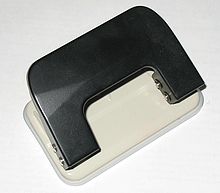
This is a hole punch. This will be used to hole
punch the paper that the killer had made notes
on. The aggressive way in which they use this
tells us they have a vicious side to their character.
Also, the use of this object shows that the killer is
very organised and he orders the papers, straightens
them and uses the hole punch. This shows organisation
and that they are a meticulous planner
This is a pen. This is used on several different
occasions during the opening where the psychiatric
makes notes with the pen, twiddles the pen in between his
thumbs etc. this suggests the killer pays a lot of attention to
detail and the camera will be focused on the hands with the
pen in it to create a sense of mystery and enigma.
 

This is a stapler. This isn't used in the
opening but is present on the desk of the
killer. The presence of this object again shows
the organisation of the character as it allowed
the papers to be organised and therefore the
character could refer back to important
 information easily.
 

Planning: Storyboard

Creating a storyboard is useful and is an important stage of planning. It is both useful and important because it gives you a good idea of what the film opening is going to be allowing you to assess the strengths and weaknesses and therefore make improvements should they be required. It gives you a good understanding of what is going to be achieved and it gives you something to build upon. Here below is the storyboard for our film opening;


You can see that our storyboard has good detail which was very useful to our group as it gives us a very accurate idea of what our film opening is going to be like. Also, it makes it much easier for the planning of other things such as the casting, location and mise en scene. This is the case as all the information required to carry out these planning stages is included in the storyboard. Furthermore, it also gave a rough idea of the camera angles/shots/movements etc. that will be used when we come to film and therefore it becomes a very useful tool to refer back to when we come to do the filming for the opening. 

Planning: Screenplay

Psychiatrist
by
Liam Wood and Scott Hackett
Fade in:
Title - 'BROADMOOR FILMS PRESENTS'
This is in a white, scratchy font in front of a book background with is all in capitals
Goes to a dead cut with a black screen.
Title two appears in bottom right hand corner in white, scratchy font
After variouis shots a black screen appears with the name of the 2nd actor in white, scratchy font.
Close up of notes being written in a book showing another actor title which is again in a white, scratchy font
Camera shot - extreme close up
shows hands cutting up photos of victim (victim 2)
Close up of blood being smothered over the page. Blood is red (obviously) on top of pages which are white
Dead cut. goes to the whole face being crossed out (victim 1)
close up of photos being aligned on the page. Screen has a red filter. The title again is in a white, scratchy font stating 'music by...'
Close up of photo being stuck down onto the page which is being rubbed over by the palm of a hand.
Camera shot - mid shot
Panning shot of filing cabinet with the title statin 'written by...'. The title is again in a whit scratchy font.
Close up shot of the main characters hand shuffling the papers together, banging them on the table to line them up and then laying them back down.
The screenplayt is finished with a black screen with a title saying 'directed by...'. This title is again in white, scratchy font.

Planning: Treatment

The film opening starts with a clip of a book opening up, where the fist title appears in the bottom right hand corner. There is then a dead cut to a black screen where we have title 2 in the top right hand conner of the screen. We then have a dead cut to a hand turning a page of a book with title three appearing at the bottom of the screen. We then have a close up of a blunt object, or the weapon that the psychiatrist uses with the camera panning across, then a cut to a black screen with title five appearing on the left hand side of the screen. We will have a dead cut to a black screen where we will have the main actors name in the center of the screen in rather larger writin than the previous texts. we then have an extreme close up of the index finger and thumb rolling a pen inbetween. There is then a cut to a black screen and the mane of our second actor appears in the centre of the screen. We then have a cut to a clip of the psychiatrists cutting up of newspaper titles linked to the killings, the screen then cuts to black where the film title appears in the middle of the screen, slightly off centre in larger writing than all other texts. The cut then goes to a hand grabbing a closed book off of a table with a few sheets of paper scattered. This is also cross-cut or over-lapped with a clip of pages being turned. This cross-cut is then changed into just the clip of pages turning with another actors name appearing. We then see a man writing notes in a book when the name of another actor pops up in the corner. The man writing his notes is then overlapped with a a still picture of some notes that have been made prior. There is a cut to a black screen with the name of another actor that stars in the film. There is then a cut the actor cutting up photos of the victims that have been killed after they have died. Another black screen and another actors name appears on the screen. We then see the actor cutting out pictures of his victim when they were alive then the cut again, goes to a blckscreen ander an actors name comes up. The cut then goes to the psychiatrist cutting up more photos of the victims when they've been murdered and then we see him slide them onto the page from a different angle. There is then a page of notes that has blood splattered over it and the actor runs his hand over the page. There is then a close up of the psychiatrist writing notes with a couple of layers of hands over lapping just off centre. There is a black scrren for the majority of the scree but then a spotlight towards the top right hand side where we can see a picture of one of the victims. Here we can see the title of who did the casting for the film. In the spot light we can see the psychiatrist get a marker pen and draw a line through the eyes of the victim. Then a dead cut to the same screen set up but with the whole face already crossed out and witht he man just drawing the last line; then we have a cut to an extreme close up of the pentip writing notes. The psychiatrist then aligns the pictures onto the page with a red filter over the whole screen, the title of 'music by...' then comes onto the screen. We then have the killer sticking the pictures down onto the page from a height and we have a dead cut to a black screen with the title of 'Edited By...' and then a cut to the psychiatrist rubbing his hand over the picture that has just been stuck down in the previous clip. There is another dead cut of the psychiatrist picking up a pile of notes that are on the desk, then a fading in cut of the book being turned with the pictures of the victims on it. There's a cut to a black screen with the title of 'Director of Photography' appearing in the centre of the screen. There is then a clip of the psychiatrist holding a pen in the writing position in the air. Another black screen is shown with the title of 'Executives Producers'. There is then a pan of a filing cabinet where the lighting is quite dim, and the title of 'written by' comes onto screen. A cut to the killers hands shuffling papers together, tapping the bottom onto the table and then laying them down. A black screen once again appears with the title 'produced by' comes onto the screen, there is another pan of a filing cabinet but with brighter lighting and the final dead cut is to a final brack screen with the directors name on again.

Research: Target Audience Feedback

Target audience feedback is an important part of the process in creating a film. It is used to give us, the film producers, a clear idea of what our target audience will prefer to see in our final production. We presented 15 people, who fit in the bracket of our target audience, with two possible film openings that we have created. They read the openings and the commented on which one they liked the best and what they liked about it. Although this is only a brief survey, it gave us an idea of whether these ideas were good or if we needed to re-think our potential openings. When we did the survey, all the people we interviewed were enthusiastic about the openings and were thoroughly engaged. From this we can tell that these potential openings were a success. We created the pie chart and also a short video of what a few people thought about their favourite opening.


Research: Pen Portrait Of Target Audience

This is the pen portrait for our target audience. The idea of the pen portrait is to narrow down the qualities of our ideal target audience to who we would like to have watch our horror film. This is a much more specific version of what we envisage our audience to be and it almost describes one person. We looked at qualities like age, social media usage, sports, jobs, family and home life, food likes and obviously film interests. The pen portrait that we have come up with is the one below;